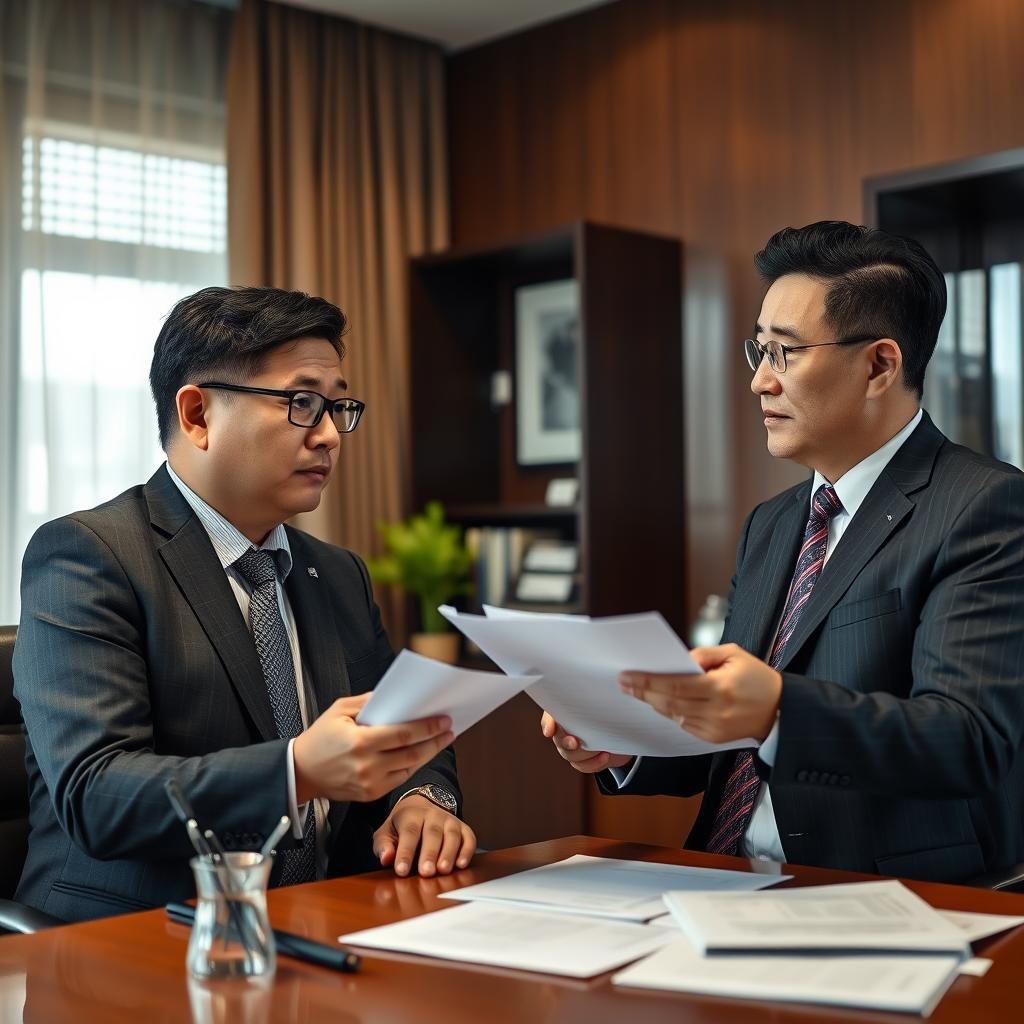
Korean investor counsel for Peru
Korean investors pursuing opportunities in Peru — whether in mining, infrastructure, manufacturing, or technology — operate across at least three legal frameworks: Korean law governing their corporate structures, Peruvian law governing their in-country operations, and, frequently, US law governing international financing, sanctions compliance, and cross-border dispute resolution. Law Offices of SRIS, P.C., a US law firm founded in 1997 with an international clientele, provides counsel to Korean investors on the US-law dimensions of their Peru-focused investments. Mr. Sris, Owner and Founder of the firm, is admitted to practice in Virginia, Maryland, the District of Columbia, New Jersey, and New York, and leads the cross-border practice. For matters requiring representation under Peruvian law, the firm collaborates with Martín Mayandía, Of Counsel for Peru matters. Mr. Mayandía is admitted to practice law in Peru. He is not admitted to practice law in the United States. Reach Law Offices of SRIS, P.C. at (888) 437-7747 to discuss your cross-border matter.
What cross-border counsel for Korean investors in Peru covers
Cross-border counsel for Korean investors in Peru addresses the legal intersection where a Korean-domiciled investor’s Peruvian business activities implicate US law, Peruvian law, or both. Many Korean investments in Peru are structured through entities or financing arrangements that touch US jurisdiction — funds administered in New York, loan agreements governed by Delaware law, or equipment sourced from US suppliers subject to export controls. A US-admitted attorney addresses these US-law dimensions, while Peruvian-law matters are handled by Peruvian-admitted counsel in collaboration.
The legal terrain includes US sanctions compliance administered by the Office of Foreign Assets Control (OFAC), as of 2026, which may affect transactions involving designated persons or entities even when the investment is Peru-focused. It also includes the Foreign Corrupt Practices Act (FCPA), 15 U.S.C. § 78dd-1 et seq., which can apply to Korean issuers listed on US exchanges or to conduct occurring in US territory. On the Peruvian side, the Decreto Legislativo No. 1352 (2017) and related anti-corruption framework impose parallel obligations. A coordinated US-Peru counsel team helps the investor navigate both regimes without conflating the distinct statutory elements of each.
Investment structuring frequently involves the 1961 Hague Apostille Convention, to which both the Republic of Korea and Peru are contracting parties as of 2026. Corporate documents from Korean registries can be authenticated by apostille for use before Peruvian authorities, eliminating the need for chain-legalization through consular channels. The distinction between apostille and chain-legalization matters in practice: if a document originates in a non-signatory country, an entirely different authentication path applies. Counsel verifies each document’s origin and the applicable convention status before proceeding.
How Mr. Sris and his Of Counsel handle Korean investor matters involving Peru
The firm’s approach to Korean investor matters involving Peru rests on a strict jurisdictional division: Mr. Sris and the firm’s US-admitted attorneys handle US-law questions, while Martín Mayandía, Of Counsel for Peru, handles Peruvian-law questions. Mr. Mayandía is admitted to practice law in Peru. He is not admitted to practice law in the United States. This division is not a formality — it is the operational structure that keeps the representation compliant with the unauthorized-practice-of-law rules in each jurisdiction.
On a typical engagement, the US-side work might include reviewing a New York-law-governed shareholders’ agreement for OFAC sanctions risk, analyzing FCPA exposure arising from a contemplated joint venture with a Peruvian state-owned enterprise, or advising on US visa options under the L-1 intracompany transferee or E-2 treaty investor categories for Korean executives relocating to oversee Peruvian operations. The Peruvian-side work, handled by Mr. Mayandía, may include formation of a Peruvian subsidiary (Sociedad Anónima Cerrada or similar), review of Peruvian tax-stability agreements under Decreto Legislativo No. 662, or analysis of foreign-investment registration requirements with ProInversión, the Peruvian investment-promotion agency. The two sides coordinate as needed, but each attorney practices only within their jurisdiction of admission.
Dispute-resolution structuring is a frequent component. The New York Convention on the Recognition and Enforcement of Foreign Arbitral Awards, to which Korea, Peru, and the United States are all contracting parties, provides the treaty framework for enforcing arbitral awards across these jurisdictions. Counsel experienced in cross-border arbitration can advise on seat selection, governing law, and enforcement strategy — each choice carrying significant practical consequences for a Korean investor with Peruvian operations.
About Mr. Sris and the sriscounsel Of Counsel network
Mr. Sris, Owner and Founder of Law Offices of SRIS, P.C., is admitted to practice law in Virginia, Maryland, the District of Columbia, New Jersey, and New York. He founded the firm in 1997 and has built a cross-border practice serving international clients with US legal needs. Mr. Sris testified before the Virginia House Courts of Justice Committee in support of 2019 HB 635 (chief patron Del. David Bulova).
The firm’s Of Counsel network includes attorneys admitted in foreign jurisdictions who collaborate on matters involving foreign law. For Peru matters, Martín Mayandía serves as Of Counsel. Mr. Mayandía is admitted to practice law in Peru. He is not admitted to practice law in the United States. Mr. Sris and his Of Counsel bring extensive combined legal experience across US and foreign jurisdictions. Law Offices of SRIS, P.C. is a US law firm with an international clientele — it does not hold itself out as a firm authorized to practice law outside the United States, and the distinction is material for unauthorized-practice-of-law purposes. Every attorney on a matter practices only within their jurisdiction of admission.
Frequently asked questions
Do I need both a US-admitted attorney and a Peru-admitted attorney for my investment?
If your investment has a genuine US-law dimension — such as US-based financing, US shareholders, or US regulatory exposure — then engaging both a US-admitted attorney and a Peru-admitted attorney is typically the soundest approach. The US-admitted attorney handles US-law questions including FCPA compliance, OFAC sanctions screening, and US visa strategy. The Peru-admitted attorney handles Peruvian corporate formation, Peruvian tax registration, and Peruvian regulatory compliance. The two work in coordination, each within their respective licensure. If your matter involves only Peruvian law with no US nexus, you may need only Peruvian-admitted counsel. A consultation can clarify which dimensions apply to your specific situation. For guidance on your specific cross-border situation, reach Law Offices of SRIS, P.C. at (888) 437-7747.
How does the 1961 Hague Apostille Convention affect my Korean corporate documents for use in Peru?
Because both the Republic of Korea and Peru are contracting parties to the 1961 Hague Apostille Convention as of 2026, Korean corporate documents — such as certificates of incorporation, board resolutions, and powers of attorney — can be authenticated by apostille issued by the competent Korean authority, rather than undergoing chain-legalization through multiple consular offices. The apostille certifies the authenticity of the document’s signature and seal, and Peru must recognize it without further authentication. Documents originating in non-signatory countries require the longer chain-legalization path. Verification of current signatory status before each transaction is advisable, as treaty membership can change. For a consultation on cross-border counsel, reach Mr. Sris and his Of Counsel network at (888) 437-7747.
Can US sanctions affect my Peru-focused investment even if I am a Korean investor?
Yes. US sanctions administered by OFAC can reach transactions that have a US nexus — for example, transactions denominated in US dollars that clear through US correspondent banks, transactions involving US persons or entities, or transactions involving goods or technology of US origin. Even a purely Korea-to-Peru investment may be affected if it involves dollar-denominated transfers passing through the US financial system. As of 2026, OFAC maintains multiple sanctions programs targeting specific countries, entities, and individuals. A sanctions screening before committing capital is a prudent step. The screening identifies whether any counterparty, intermediary, or beneficial owner appears on the SDN List or other restricted-party lists. For guidance on your specific sanctions-compliance questions, contact Law Offices of SRIS, P.C. at (888) 437-7747.
What is the FCPA risk for a Korean investor operating in Peru?
The FCPA, 15 U.S.C. § 78dd-1 et seq., can apply to a Korean investor if the investor is an issuer of securities on a US exchange, or if any act in furtherance of a corrupt payment occurs in US territory. The FCPA’s anti-bribery provisions prohibit corrupt payments to foreign government officials to obtain or retain business. A Korean company listed on the NYSE or Nasdaq is squarely within FCPA issuer jurisdiction. Even a non-issuer Korean entity may face FCPA exposure if, for example, a US-based agent or intermediary is involved in the transaction. Peru’s own anti-corruption framework under Decreto Legislativo No. 1352 imposes separate obligations under Peruvian law — distinct from the FCPA in both jurisdictional reach and statutory elements. A coordinated US-Peru compliance review addresses both frameworks. To discuss the details of your international matter, contact Law Offices of SRIS, P.C. at (888) 437-7747.
How are cross-border disputes between Korean investors and Peruvian counterparties typically resolved?
International arbitration is the most common mechanism, typically seated in a neutral forum such as Singapore, London, or Miami, and governed by the rules of institutions such as the ICC, LCIA, or SIAC. The New York Convention, to which Korea, Peru, and the United States are all contracting parties, provides the treaty framework for enforcing arbitral awards in any of these jurisdictions. The choice of arbitral seat, governing law, and language in the arbitration clause has significant practical consequences and should be negotiated at the investment-structuring stage — not after a dispute has arisen. Peruvian courts may also be the appropriate forum for disputes governed by Peruvian law where the counterparty is a Peruvian entity with principal assets in Peru. For a consultation on dispute-resolution structuring, reach Law Offices of SRIS, P.C. at (888) 437-7747.
Can Mr. Sris or the firm represent me directly before Peruvian authorities?
No. Mr. Sris and the firm’s US-admitted attorneys represent clients before US authorities only — they are not admitted to practice law in Peru and do not appear before Peruvian courts, agencies, or regulatory bodies. Peruvian-law matters are handled by Martín Mayandía, Of Counsel for Peru, who is admitted to practice law in Peru and is not admitted to practice law in the United States. The firm’s model is collaborative: Mr. Sris handles the US-law side, Mr. Mayandía handles the Peruvian-law side, and the two coordinate. This preserves the integrity of each jurisdiction’s licensure requirements while providing the investor with coherent cross-border counsel. For guidance on your specific cross-border situation, reach Law Offices of SRIS, P.C. at (888) 437-7747.
Whichever market you are coming from, the Peru side of the lawyer is the same. Our page on Peru lawyer sets out the whole process.