Peru family reunification
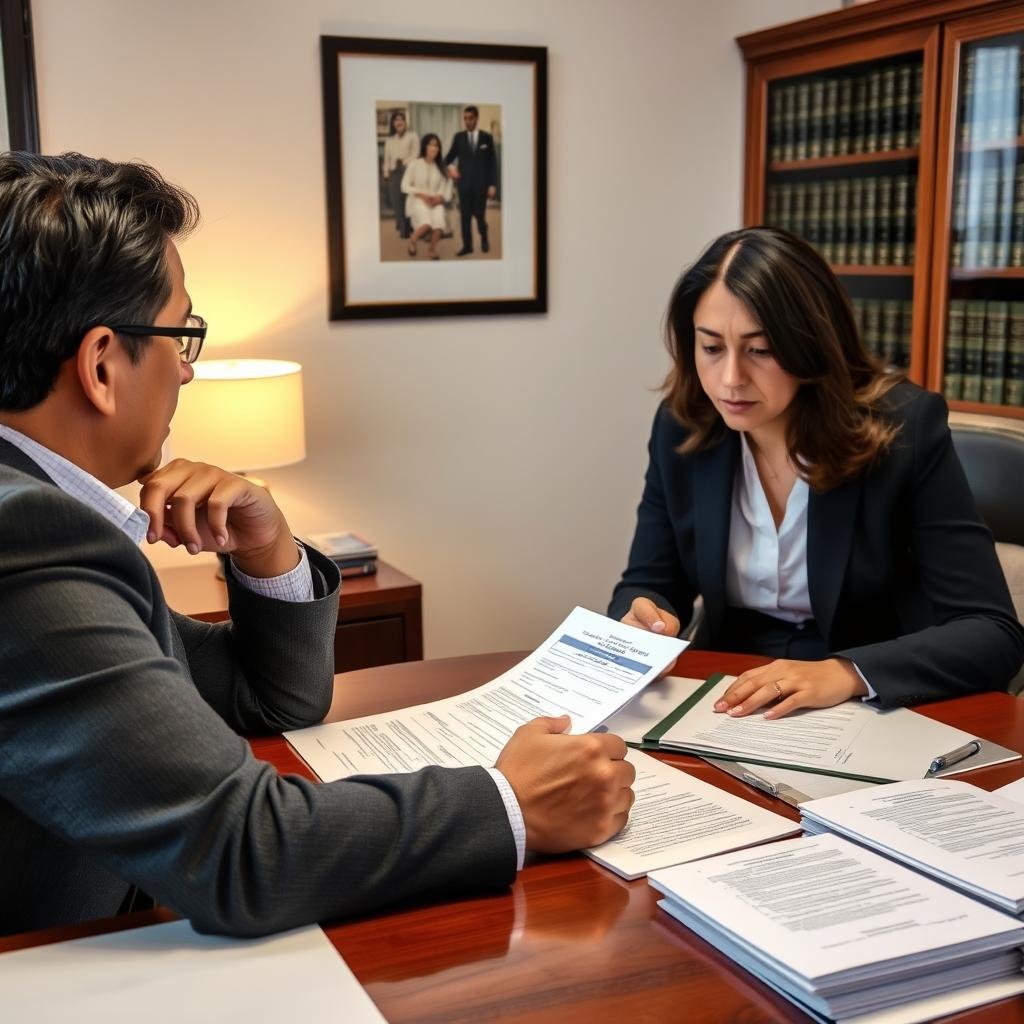
Bringing a family member from Peru to the United States requires navigating the US family-based immigration process while also managing Peruvian documentation and cross-border logistics. Law Offices of SRIS, P.C. assists US citizens and lawful permanent residents in petitioning for Peruvian relatives. The firm’s US-licensed attorneys, led by Mr. Sris, handle the entire US immigration side — filing Form I-130, preparing affidavits of support, and guiding the beneficiary through consular processing at the US Embassy in Lima. For Peruvian-law elements — such as obtaining and authenticating Peruvian civil records or verifying legal capacity — the firm collaborates with Martín Mayandía, Of Counsel for Peru matters. Mr. Mayandía is admitted to practice law in Peru. He is not admitted to practice law in the United States. To discuss a Peru family reunification case, reach Law Offices of SRIS, P.C. at (888) 437-7747.
What This Cross-Border Practice Area Covers
Peru family reunification is the US immigration process by which a US citizen or lawful permanent resident sponsors a qualifying family member to obtain lawful permanent residence. The value lies in opening a clear path for families separated by borders to unite permanently in the United States. The process is governed by the Immigration and Nationality Act and administered by USCIS and the Department of State. For Peruvian nationals, the principal US visa categories are immediate relative (IR) visas — for spouses, unmarried children under 21, and parents of US citizens — and family preference categories (F1, F2A, F2B, F3, F4) for more distant relationships. Each category carries its own priority date and numerical limits, which determine when a visa becomes available.
Because the US system is federal, the same eligibility rules apply regardless of whether the beneficiary is in Lima, Cusco, or elsewhere in Peru. The foreign-law component is limited but critical: the US government requires certain Peruvian civil documents to be presented in a specific form. Peruvian birth, marriage, and divorce records often need to be translated and, depending on the current bilateral arrangements, may require an apostille under the 1961 Hague Apostille Convention (Peru acceded in 2010). When an apostille is not available, chain-legalization through the Peruvian Ministry of Foreign Affairs and the US Embassy may be required. These document-level issues are precisely where cross-border coordination adds the most value.
How Mr. Sris and His Of Counsel Network Handle These Matters
The US-side work — processing the Form I-130 and the visa application — is led by Mr. Sris, who is admitted in Virginia, Maryland, the District of Columbia, New Jersey, and New York, and who serves as the responsible US attorney for the matter. The firm prepares the petition, assembles the supporting evidence of the qualifying relationship, and tracks the case through the National Visa Center and the US Embassy in Lima. Because the legal work is US-law-based, the client receives representation from a US-licensed attorney at every stage that involves US immigration decision-makers.
When a Peruvian document requires local authentication or when a Peruvian legal question arises (for example, a Peruvian adoption decree that must be recognized under US standards), the firm coordinates with Martín Mayandía, a Peruvian-licensed Of Counsel. Mr. Mayandía is admitted to practice law in Peru. He is not admitted to practice law in the United States. His limited role is to advise on Peruvian document requirements and, when needed, to obtain or certify Peruvian records. This jurisdictional separation ensures that no attorney is practicing outside their licensure and that the client receives accurate input on both sides of the border.
About Mr. Sris and the Law Offices of SRIS, P.C. Of Counsel Network
Mr. Sris, Owner and Founder of Law Offices of SRIS, P.C., has been assisting clients with US immigration matters since the firm was founded in 1997. He is admitted to practice in Virginia, Maryland, the District of Columbia, New Jersey, and New York. Mr. Sris testified before the Virginia House Courts of Justice Committee in support of 2019 HB 635 (chief patron Del. David Bulova), the bill that became the 2019 revision to Va. Code § 20-107.3(g). His US immigration practice concentrates on family-based petitions, adjustment of status, and consular processing, always with a focus on careful case preparation and US-law compliance.
The firm’s international Of Counsel network includes attorneys licensed in foreign jurisdictions who collaborate on the foreign-law aspects of cross-border family matters. For Peru, Martín Mayandía brings deep knowledge of Peruvian civil documentation and procedure. Mr. Mayandía is admitted to practice law in Peru. He is not admitted to practice law in the United States. Mr. Sris and his Of Counsel bring extensive combined legal experience to each cross-border family reunification matter. Results may vary; past results do not guarantee a similar outcome.
Frequently Asked Questions
Who can petition for family reunification from Peru?
Only a US citizen or lawful permanent resident (green card holder) can petition, and the beneficiary must be a qualifying relative under US immigration categories. US citizens may sponsor spouses, unmarried children under 21, parents (if the petitioner is at least 21), and, in preference categories, adult children and siblings. Lawful permanent residents may sponsor spouses and unmarried children. For Peruvian beneficiaries, the same rules apply; the key is establishing the qualifying relationship with reliable Peruvian civil documents, something the firm’s Peruvian Of Counsel can assist in assembling. To discuss eligibility, reach Law Offices of SRIS, P.C. at (888) 437-7747.
What documents from Peru are needed for family reunification?
The US government typically requires birth certificates, marriage certificates, divorce decrees (if applicable), police certificates, and sometimes military records, all originating from Peru. These documents must be original or certified copies, accompanied by certified English translations. Under the 1961 Hague Apostille Convention, an apostille from the Peruvian Ministry of Foreign Affairs may be sufficient; if an apostille is not available for a particular document type, consular legalization through the US Embassy is the alternative. Martín Mayandía, as Peruvian Of Counsel, can guide the authentication process. For the exact current requirements, consult the Department of State’s reciprocity schedule for Peru.
How long does the family reunification process take for Peru?
Processing times vary based on the visa category, USCIS workload, and the priority date of the petition. Immediate relative cases (spouse, minor child, parent of a US citizen) generally move faster than family preference categories, but backlogs can still occur. The National Visa Center and the US Embassy in Lima each add their own processing windows. The firm tracks each case individually and helps clients anticipate likely timelines based on current USCIS processing reports and the Department of State’s Visa Bulletin. Because circumstances change, the firm does not guarantee a specific completion date.
What happens at the US Embassy in Lima during consular processing?
The beneficiary attends a visa interview at the US Embassy in Lima, where a consular officer reviews the petition, the supporting documents, and the beneficiary’s eligibility for a visa. Before the interview, the firm helps the beneficiary prepare the required forms (DS-260), gather original Peruvian civil documents, and complete the medical examination with an approved panel physician. The actual interview lasts only a short time, but thorough preparation is critical. If the officer requests additional evidence, the firm works with the Peruvian Of Counsel to obtain and submit it promptly.
Can adult children of a US citizen receive family reunification benefits?
Yes, US citizens may petition for married or unmarried adult children (over 21) under the family first (F1) or family third (F3) preference categories, subject to annual numerical limits. For Peruvian children in the F1 category (unmarried sons and daughters of US citizens), the priority date wait can be several years. The F3 category (married sons and daughters) also carries a backlog. The firm can explain the current priority dates as published in the Visa Bulletin and help plan a strategy that accounts for these timelines. For a detailed assessment, contact Law Offices of SRIS, P.C.
How does the collaborative model with Peruvian Of Counsel work in practice?
The client retains Law Offices of SRIS, P.C. for the US immigration representation; the Peruvian Of Counsel is engaged by the firm solely for the limited purpose of assisting with Peruvian-law document matters. Mr. Sris remains the attorney responsible for the US immigration side, including all communications with USCIS and the National Visa Center. Martín Mayandía assists with obtaining, authenticating, and translating Peruvian documents, always under his independent Peruvian license. The two sides communicate as needed, but no attorney crosses into the other’s jurisdiction. This structure ensures compliance with both US bar rules and Peruvian Colegio de Abogados de Lima requirements.